Showing posts with label Travels. Show all posts

Friday, 10 August 2018

My final days in Accra

En dan is het dan eindelijk zo ver: mijn laatste week in Accra - Ghana is aangebroken.
Met gemengde gevoelens ga ik voor de allerlaatste keer naar de Makola markt waar talloze stalletjes en winkeltjes tot de nok toe zijn gevuld met stoffen, zowel lokaal geproduceerd als Chinese namaak. Gelukkig weet ik na 3 jaar waar ik goed kan slagen.

At last my final days in Accra - Ghana are there. 
Filled with mixed emotions I went for one more time to the Makola market to buy just a little bit more fabric. So many stalls and little shops are filled from floor to ceiling with local and foreign (China counterfeit) fabrics. Fortunately, after 3 years, I know where to go for my fabric stash.

Shop assistants at Perpetua's GTP fabric shop

Nog een keertje ga ik langs bij de sjieke Vlisco winkel in Accra Mall waar het prima is uit te houden in de heerlijke gekoelde lucht. Heel wat anders dan op de markt! De prijzen liggen natuurlijk een stuk hoger met deze in Nederland geproduceerde stoffen!

One more visit to the Vlisco fabric store at the Accra Mall can not be skipped! In this air-conditioned shop you can only find fabrics produced in the Netherlands for the West-African market. Prices are significant higher, and so is the quality!


Mijn kleine quiltgroepje heeft een afscheidscadeau gemaakt met lokale stofjes...
My quilt group friends made me a farewell present with local fabrics...


In de afgelopen maanden heb ik mijn kennis van het dozen maken mogen delen met een paar jongens van een klein bedrijfje in Accra. Ook van hun moet ik helaas afscheid nemen. Maar ik weet zeker dat ze met hun nieuwe vaardigheid vele mooie doosjes zullen gaan verkopen.

In the past few months I had the pleasure of sharing my box making skills with a few boys from a small company in Accra. Unfortunately I had to say goodbye to them as well. But I am pretty sure they will be able to use their new skills and make beautiful boxes for the local market.


You can find these guys on Instagram @nyosgh

Voor twee lieve vriendinnen heb ik op de valreep deze 2 mandjes gemaakt met repen stof en katoen touw. Een heel leuk werkje waar ik over een tijdje nog eens mee door wil gaan.

For two dear friends I made 2 baskets from strips of fabric and cotton rope. So much fun to do, I definitely will do again in the near future. 


En dan is het koffers pakken geblazen! Omdat ik niet weet hoe lang het zal duren voordat de spullen met de verhuizer komen neem ik zoveel mogelijk stof zelf mee... 

Finally the moment is there to pack my suitcases.Because I have no idea how long our shipment of personal effects will take I try to take as much fabric as possible with me on the plane... 


2 suitcases filled with 40 kilo of fabric 😂

Good bye Ghana
One day I will be back


Groetjes, Hilde

Tuesday, 1 August 2017

Dipo Festival at a Krobo tribe in Ghana

 Een paar maanden geleden kreeg ik de gelegenheid om het Dipo Festival bij te wonen bij een Krobo stam in een dorpje buiten Accra. Tijdens deze traditionele week van ceremonies worden meisjes voorbereid voor de overgang naar het vrouw-zijn. Naast de trots die het aan de meisjes en hun familie brengt, is men er ook van overtuigd dat de meisjes, die succesvol de Dipo rituelen doorstaan voordat ze een man 'aanraken', zeer goede vrouwen worden. Het doel is dat de meisjes hun maagdelijkheid behouden voordat ze trouwen. Deze traditie wordt alleen door de Krobo stam gevierd, een van de meer dan 50 verschillende stammen in Ghana.

A few months ago I was able to witness the Dipo Festival at a Krobo tribe in a village just outside of Accra. During this traditional week of ceremonies, girls are prepared for the transition to womanhood. In addition to the pride it brings to the girls and their families, they are convinced that the girls, who successfully go through the Dipo rituals before touching a man, become a very good wife. The goal is that the girls maintain their virginity before they marry. This tradition is celebrated only by the Krobo tribe, one of the more than 50 different tribes in Ghana.


At the courtyard of a Krobo family

 Tijdens het Dipo Festival krijgen de meisjes lessen in dans, muziek, koken, het huishouden en wat er van ze verwacht wordt als ze getrouwd zijn. Op de laatste dag kleden ze zich in mooie Afrikaanse doeken (pagnes)

During the Dipo Festival the girls are given lessons in dance, music, cooking, the household chores and what is expected from them when they are married. On the very last day they dress in beautiful African cloths (pagnes)

The girls dressed in their best pagnes


The Paramount Queen

De 'Paramount Queen' legt het een en ander uit over de hormonale cyclus en geeft seksuele voorlichting. Zij reist in deze periode van Dipo rond langs verschillende families van de Krobo stam om zoveel mogelijk voorlichting te geven.

The 'Paramount Queen' explains what happens to their bodies during the hormonal cycle and gives them some sex education. During the Dipo time she travels around to visit more Krobo families to educate as many girls as possible.


A girl dressed in Vlisco 'Guaranteed Dutch Wax cloth'

Hierna volgt een soort reinigend wassen waarbij de meisjes wat water over zich heen spetteren. In dit water liggen bladeren die het water heilig maken.

After the talk the girls splash some water over themselves to clean their body and soul. The leaves in the bowl make the water holy.


On the very first day of the Dipo Festival, their heads are shaved except for a small dot


Als ze alle rites van de afgelopen week goed hebben doorstaan, kleden de meisjes zich, op deze laatste dag, om voor de laatste rite bij de 'Heilige Steen'. De witte lapjes stof gedrapeerd om hun lichaam bevestigt hun maagdelijkheid en de vele kralen rond hun heupen laten ze zien hoe rijk hun familie is. De blauwe kralen staan voor tederheid en genegenheid, de gele kralen voor volwassenheid en welvaart. Dit is het enige moment waarbij bij sommige meisjes de borsten ontbloot zijn om hun puberteit te bewijzen. Niet zo heel gek dat er ineens een heleboel jonge mannen op dat moment een kijkje komen nemen!

When they have successfully finished all the rites of the past week, the girls dress up on this last day for the final rite at the 'Sacred Stone'. The white cloths draped around their bodies confirm their virginity and the many beads around their hips show how well to do their family is. The blue beads stand for tenderness and affection, the yellow beads for adulthood and prosperity. This is the only time where some of the girls expose their breasts to prove their puberty. No surprise suddenly a lot of young men show up!


Met een witte kleipasta worden strepen aangebracht op hun lichaam. Met een stok en ook vaak een houten kruisje in de hand gaan de meisjes in kleine groepen naar de 'Heilige Steen'. Het blaadje tussen de lippen zorgt ervoor dat de Dipo meisjes onderweg zwijgen en geconcentreerd blijven terwijl ze naar de Heilige Steen lopen. Sommige meisjes hebben de darmwand van een geit op hun hoofd. Deze wordt achtergelaten bij de Heilige Steen. Het staat symbool voor het zijn van een goede kokkin voor haar toekomstige echtgenoot.

With a white clay paste, stripes are applied to their body. With a stick and often a wooden cross in their hands, the girls walk in small groups to the 'Sacred Stone'. The leaf between their lips ensures that the Dipo girls keep quite and stay focused while walking to the Sacred Stone. Some girls carry the intestine wall of a goat on their head which will be left at the Sacred Stone. It is believed this will help them to be a good cook to their future men.


Goat intestine on the head


Leaves between the lips

De Heilige Steen staat op een heilige plek waar verder niemand bij mag. Bij deze steen wordt hun maagdelijkheid bewezen en daarna worden ze met veel gegil en gejoel op de rug van een jongen naar huis geracet. Deze jongen is meestal hun vriendje.

The Sacred Stone stands in a shrine where no one else is allowed in to. At this shrine their virginity is proven and afterwards they are carried back to the house on the back of a boy while screaming and yelling. This boy is usually their boyfriend.


Groetjes, Hilde

Thursday, 13 April 2017

Ghanaian's famous fantasy coffins


Wat al een tijdje op mijn lijstje stond was een bezoekje aan een van de bekendste fantasie grafkistenmaker van Ghana ten noorden van Accra: Paa Joe. Paa Joe (papa Joe) zelf is nu 70 jaar en met pensioen en zijn zoon Jacob heeft de zaak overgenomen. Natuurlijk komt Paa nog af en toe langs om te kijken hoe het er met het werk voor staat.

It was on my Ghana bucket list for some time: a visit to one of the most famous fantasy coffin makers of Ghana, Paa Joe. Paa Joe himself has now reached the respectable age of 70 and has retired from work while his son Jacob has taken over the workshop. Paa Joe still visits the place every now and then to keep on eye on the proces of the coffins in proces. 


The eagle

Als we de ruimte betreden staan we meteen oog in oog met geweldige houten kunstobjecten die allemaal grafkisten blijken te zijn.

When we enter the place we immediately stand face to face with beautiful wooden art pieces which appear to be all coffins.

Coca Cola bottle and Sankofa bird

Inside the Coca Cola coffin


Turkey


Onion

Achter deze ruimte is de werkplaats waar de kisten worden gemaakt. Op dit moment werkt Jacob aan een aantal bestellingen vanuit Amerika.

Behind the the shop is the place where all coffins are being made. Right now Jacob is working on some custom orders from the USA.

Eagle

The base and feet for the eagle


Jacob slaat de kop van de spijkers kleiner zodat ze makkelijker in het hout verdwijnen.
Jacob prepares the head of the nails before hitting them into the wood pieces


Aan de hand van verschillende foto's wordt de vorm bepaald. Daarbij probeert hij zoveel mogelijk op schaal te werken, zodat alle proporties kloppen. Er is dus geen bouwtekening, alles wordt op gevoel en ervaring gemaakt. De kisten voor de echte, lokale, begrafenissen worden van een lichter houtsoort gemaakt: wawa (wit hout) of emien. De kisten die ge-exporteerd worden zijn gemaakt van een duurder soort hout zoals mahonie of Afrikaanse limba. Het duurt ongeveer 2 tot 6 weken om een kist te maken, afhankelijk van de complexiteit van het ontwerp.

The shape is determined on basis of different pictures and he tries to keep the proportions correct. There is no such thing as a construction drawing; every item is made on intuition and years of practise. For the local burials a lighter type of wood is used, like wawa (white wood) or emien. For the coffins that will be exported a more expensive type of wood is used like mahogany or African limba. It takes about 2 to 6 weeks to produce one coffin, depending on the complexity of the design.


A patchwork of wood forms the base for a swan

Chameleon with a high of almost 2 meter

Deze kameleon is besteld door een verzamelaar in Los Angeles. Het is bijna klaar en moet alleen nog geverfd worden door een schilder die daarin gespecialiseerd is. Ook dit is een grafkist maar zal als een kunstobject in een galerie tentoongesteld worden.

This chameleon is ordered by a collector in Los Angeles. It is almost finished, it only lacks the paint. Therefor a painter needs to come by to do the final touch. This is a coffin as well, but will be on display in a gallery as an art piece.


Local beer, about 35cm high

Niet alleen grafkisten maar ook kleinere werkstukken worden hier op bestelling gemaakt.
Not only coffins but also smaller pieces of artwork can be made to order.


😍 (about 60 cm wide)


Vanuit het buitenland is er veel interesse in de Ghanese fantasie coffins en het werk van Paa is al vaak te zien geweest in verschillende tentoonstellingen in Nederland, Engeland, Amerika en andere landen. In 2016 is er een film over hem gemaakt: 'Paa Joe and the Lion'. 

Outside of Ghana there is much interest in the coffins made by Paa Joe and he has been able to show his work at different exhibitions in England, America, Holland and other countries. In 2016 a film has been made about him: 'Paa Joe and the Lion'


Wil je meer weten over de achtergrond van deze artistieke grafkisten klik dan op deze LINK
Would you like to learn about about these artistic coffins from Ghana follow this LINK


Groetjes, Hilde

Saturday, 18 March 2017

Mondrian and El Anatsui in my home country Holland

Even de batterij opladen met familie en vrienden, frisse wind, wandelen en fietsen, kunst en cultuur!
Het is maar een kort bezoek omdat P via Amsterdam moet reizen en ik niet alleen in Accra wil achterblijven. Daarvoor is er te weinig te doen, te weinig afleiding, te warm en bovendien mis ik musea met kunst en cultuur om creatief geïnspireerd te worden.

Just a short visit to my home country, to see my family and friends, enjoy the cool weather, spring flowers, walking and biking, cheese and culture!
My husband P is travelling via Amsterdam and I don't want to stay behind in Accra. That would be too lonely for me as there is not so much to do for me in this city except for sewing and working in my studio. Besides that, it is too hot outside and I need a boost with art and culture to get inspired!


'Resolution', 2016 - 320 x 336 cm

Detail

Een van de hoogtepunten waren de kunstwerken van El Anatsui in de Galerie van het Prins Claus Fonds in Amsterdam op de Herengracht 603, vlakbij het Tassenmuseum. Deze kunstenaar is geboren in Ghana en leeft en werkt in Nigeria. Zijn wandkleden zijn gemaakt met recycled glanzende flessendoppen.

One of the highlights was the exhibition by El Anatsui at the Prince Claus Fund Gallery in Amsterdam. The artist is born in Ghana and now lives and works in Nigeria. His shimmering wall hangings are made from reclaimed bottle caps.


Untitled, 2016 - 225 x 242 cm

Detail

El Anatsui heeft diverse prijzen gewonnen met zijn kunstwerken waaronder de Prince Claus Prijs in 2009.
El Anatsui has received wide-spread acclaim including the Prince Claus Award in 2009


Untitled, 2014 - 280 x 260 cm

Detail

Een waar patchwork van verschillende vlakken en kleuren.
Nog te zien tot 28 april 2017

A true patchwork of different patches and colours
Exhibition until April 28th, 2017


Untiteld, 2016 - 260 x 460 cm


Untitled, 2016 - 260 x 250 cm

A short film about El Anatsui


In 'mijn' stad Den Haag kleurt het feestjaar van Mondriaan en De Stijl vele gevels, vitrines en zelfs de Hofvijver in de bekende vlakken van rood, geel, wit, zwart en blauw!

In 'my' hometown The Hague it's Mondrian celebration year and the town is painted in red, white, yellow, black and blue on buildings, in windows and on water!

Dutch parlement in The Hague with Mondrian design in the 'Hofvijver' pond in evening light

Heerlijk al die bloembollen die uitkomen!
Enjoying blooming spring!

Flowering bulbs near Hotel 'Des Indes' in The Hague

Mijn koffers zijn weer gepakt met kaas en karton en mijn batterij is weer opgeladen. 
Ik kan er weer een tijdje tegen!

My suitcases are packed with cheese and cardboard and my batteries are recharged. 
I will be able to deal with the African way of life again for a while.


Groetjes, Hilde

Wednesday, 8 March 2017

A visit to Sirigu, Tongo Hills and Tengzu Shrine in Ghana

Voor de laatste keer een greep uit de foto's van onze reis naar het noorden van Ghana.
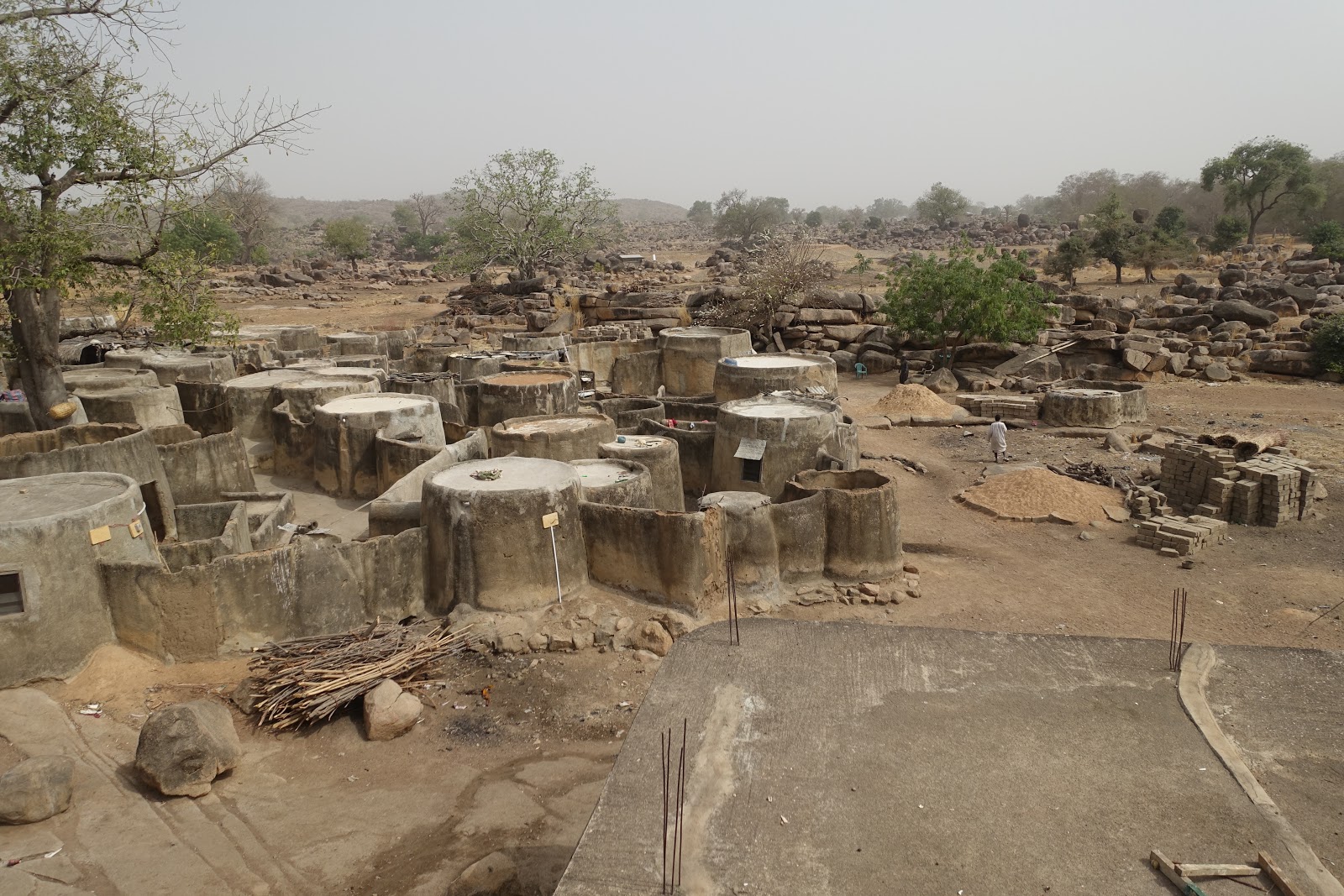
Op de laatste dag bezoeken we Sirigu, een dorpje vlakbij de grens met Burkina Faso. Hier zijn nog een aantal huizen te zien waarvan de muren beschilderd zijn met geometrische vormen en dieren. De kleuren zijn beperkt tot wit, zwart en rood, gemaakt uit natuurlijke bronnen.

For the last time a selection of pictures taken during our trip to the northern region of Ghana. On our last day we visit Sirigu, a little village close to the border with Burkina Faso. It is famous for its painted houses. The walls inside and outside a few compounds of houses are still decorated with geometric shapes and animals. The colours used are white, black and red and made out of natural sources.


Housing compound for one family with a Boabab tree


Silos to store grains inside the compound


De betekenis van deze symbolen:
Koe: het symbool van rijkdom
Python: totem symbool van de stam en bescherming
Krokodil: ter bescherming van het leven van de stam

The meaning of the painted symbols:
Cattle: the symbol of wealth
Python: totem symbol of the clan and protection
Crocodile: totem symbol of saving life of the clan


Making new bricks to restore old walls and to build an extra room

 Om het toerisme in deze uithoek te bevorderen, de cultuur te behouden en een inkomen te genereren, is er een cultureel centrum gebouwd: SWOPA (Sirigi Women's Organisation for Pottery and Art)

To boost tourism in this corner of Ghana, to keep the culture alive and give women an income they build this cultural centre: SWOPA (Sirigi Women's Organisation for Pottery and Art)


Souvenir shop at SWOPA

Fetching water

De volgende stop is Tongo Hills en het Tengzug heiligdom. Hier stap je echt eeuwen terug in de tijd. Binnenin een klein omheind complex wonen ruim 300 mensen, het volk van Tongo Hills. Buiten elk huisje staan kleine altaartjes waar kippen en geiten worden geofferd. Daarbuiten ligt het Tenzug heiligdom in een rotsachtig heuvellandschap. Hier worden met name ezels geofferd.

Next stop is Tongo Hills and the Tenzug Shrines. It is like stepping back a few centuries in time. Inside the small enclosed village about 300 people live in houses shaped like cilinders. Outside every house stands a small shrine for sacrificing chickens and goats. Outside this village, against a rocky hill, is the Tenzug shrine where donkeys are sacrificed.


The chief of Tongo Hills

The chief's hat outside his room

The village of Tongo Hills 
Daily life in the village


One of the many animist shrines inside the village


Shrine where donkeys are offered

Nog een paar laatste 'roadside' foto's 
A few more roadside pictures

Police road barrier

Vegetable seller

Our souvenirs from our trip to the north!

Groetjes, Hilde