Showing posts with label Sewing table. Show all posts

Friday, 3 March 2017

Natural indigo dyeing and weaving in Ghana

De volgende stop is Daboya, het dorp van de Indigo ververs en wevers. 
Dit is het enige dorp in Ghana waar met natuurlijke indigo verfstof katoenen draad wordt geverfd en vervolgens worden er smalle stroken mee geweven. In tegenstelling tot de kente stof, zijn deze stroken heel sober in design. Ze worden gebruikt voor de fugu, ook wel smock genoemd, een katoenen tuniek-achtig hemd zonder mouwen, dat vooral in het noorden van Ghana door mannen gedragen wordt.

Next stop is Daboya, famous for the indigo dye. This is the only village where natural indigo is used to dye cottons for fugu, the traditional dress for men in the northern part of Ghana. It is also called 'smock'.

Fugu (or smock): traditional dress for men in northern Ghana

Tot een paar jaar geleden werd er in Daboya nog gesponnen maar nu wordt het katoen gewoon gekocht. 75% Van de mannen in het dorp is betrokken bij het verven en weven en overal in het dorp staan weefgetouwen tussen de adobe huisjes terwijl de kippen, varkens en geitjes er tussendoor scharrelen.

Until only a few years ago the spinning of the yarn took place here as well, but now they have to buy the cotton yarns as no one is doing this anymore. 75% Of the male in Daboya is active in the production of fugu. The looms are everywhere in between the adobe huts where the chicken, goats and piglets room freely.

The warps are about 40 meters long

Het verfproces vindt ook middenin het dorp plaats. In putten van wel 3 meter diep worden de indigo-bladeren uit het nabijgelegen Mole park samen met een speciaal as en een zuur in een aantal dagen gefermenteerd tot de verfstof. Door middel van afbinden van de draden met oude fietsbanden ontstaan tijdens het verfproces de karakteristieke patronen van blauw en wit.

In one spot of the village the dying takes place. In puts of about 3 meter deep indigo leaves together with ash and acids are fermented until the indigo dye is ready to use. With rubber bands of old tires they use the tie dye technique to add a variation to the colour of the threads.


Dyeing, wringing and drying


Tie dye

Indigo hands

Als het katoen geverfd is in verschillende tinten blauw, wordt er een strook van 7 cm breed en zo'n 40 meter lang van geweven. Daarna kan er een fugu van gemaakt worden of een rechthoekige doek door 14 banen van anderhalve meter lang aan elkaar te naaien tot een 'women's cloth', een vrouwendoek. Een hele outfit voor een vrouw bestaat uit drie vrouwendoeken: eentje om rond het hoofd te wikkelen, eentje voor een top en een als omslag-rok.


When the cotton is painted in different tones of blue the weaving can start. The strips are only about 7 cm wide and 40 meters long. Out of these strips a fugu can be made or a women's cloth which is made out of 14 strips of 1,5 meter long. A whole outfit for a women consists of 3 cloths: one to wrap around the head, one for the top and to wrap around the legs.

Fugu weavers at work


One women's cloth

Een paar dagen na ons bezoek aan Daboya gingen we naar de Fugu markt in Bolgatanga. Het zijn hier vooral de mannen die het naaiwerk verrichten. De traditionele hemden, de 'smocks', zijn er in vele verschillende kleuren, en elke stam/regio heeft zijn eigen design.

A few days later we visited the Fugu market in Bolgatanga. Mainly men are sewing the fugu's together. There are many different colours of fugu available, each of them representing one of the many tribes in the region.


Men at work


Vlak voor ons vertrek naar huis kwam Mr. Abdul Mumin op de motor naar ons hotel met zijn zelf geweven stof en hebben we allebei een vrouwendoek en samen een rol van ruim 40 meter van hem gekocht. De doeken waren eigenlijk van zijn vrouw, dus hij zal weer nieuwe moeten maken! ;)

Mr. Abdul Mumin, who gave us a tour around in Daboya, came to the hotel with his own woven cloth. My friend and I both bought one of his women's cloths and a roll of 40 meters. Apparently the women's cloth belonged to his wife, so he has to make her a new one to keep her happy! ;)


Mr Abdul Mumin with his fugu cloth

Groetjes, Hilde

Sunday, 23 October 2016

The different colours from Ouidah in Benin

Nadat mijn familie weer naar huis was ben ik zelf 4 dagen naar Benin gegaan. Met een groepje van 8 ging ik in een busje vanuit Accra, door Togo naar Ouidah, Benin, een afstand van 300 km. 7 Uur later waren we op de plaats van bestemming.

Ik heb een kleine selectie gemaakt van de vele foto's die ik gemaakt heb, veel plezier!
I have made a small selection of the many pictures I took, enjoy!


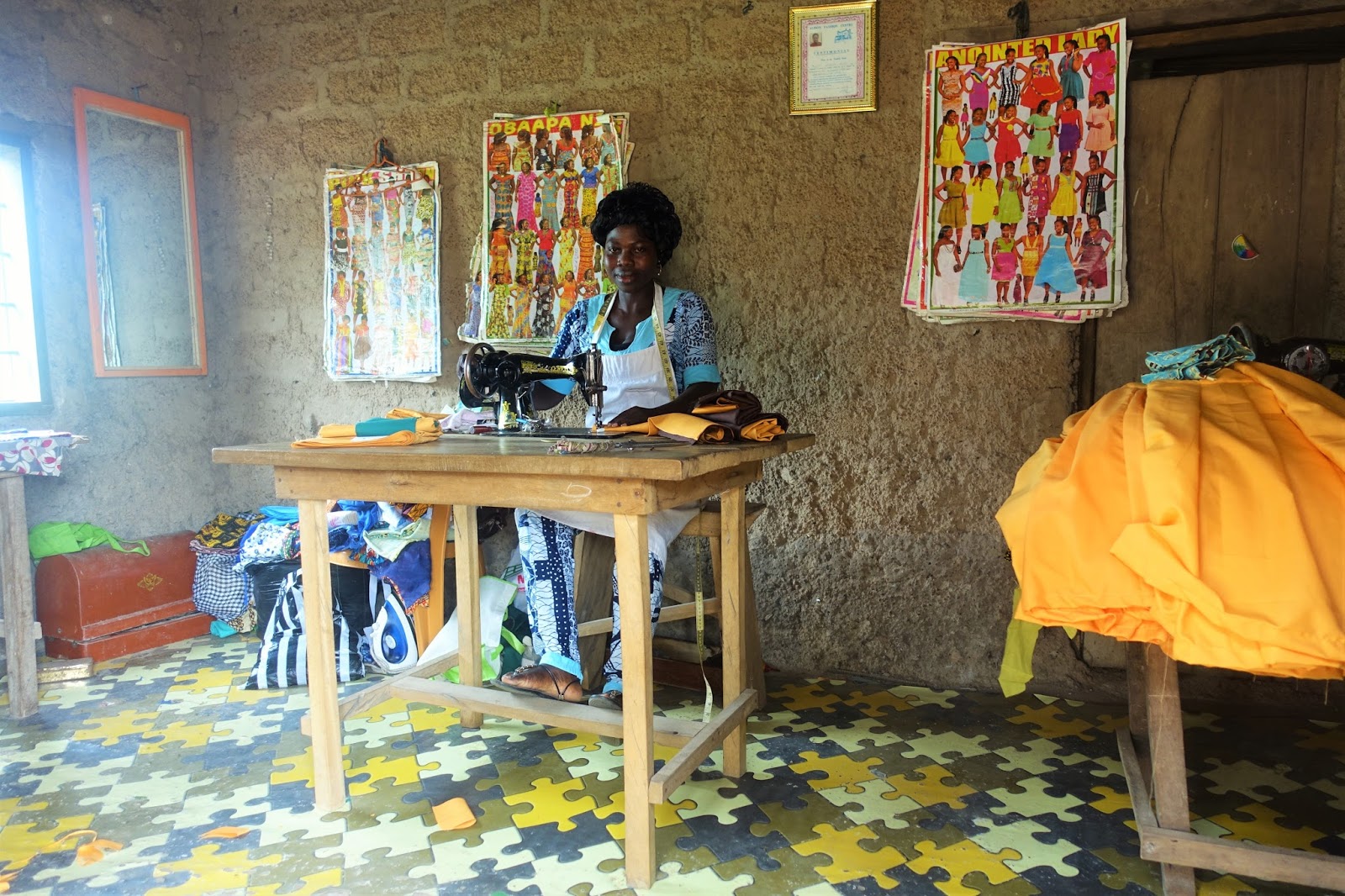
One of the many fashion shops


Hot charcoal iron is ready to press the new sewn clothes


Hair studio


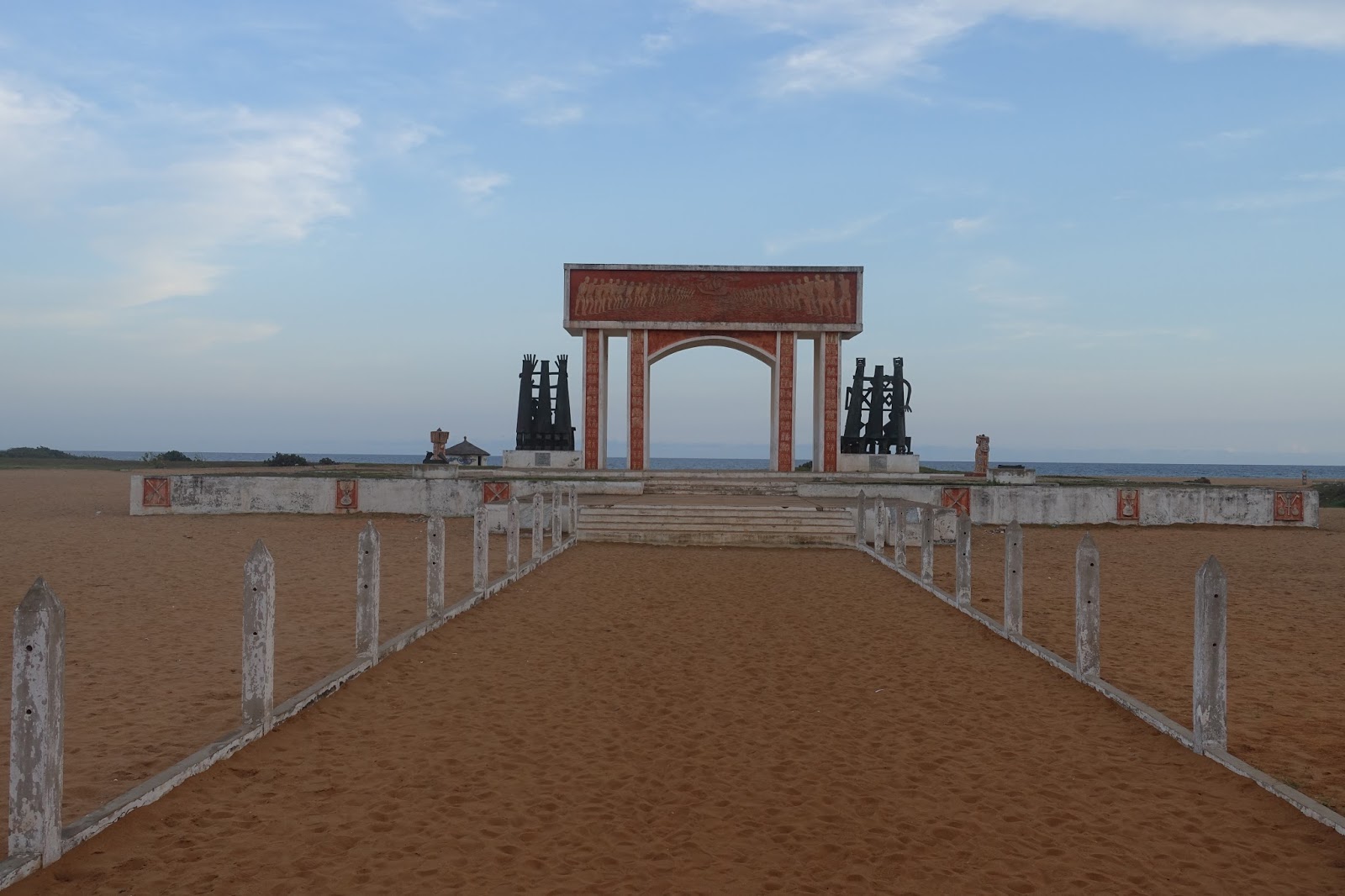
'Door of no return', a memorial arch to remember the slave trade in Ouidah, Benin


Salt winning from the salty sand in the lagoon near Ouidah


Going to the market


Very kind man


How to use 6 yards of fabric


Gentleman


Locally made appliqued souvenirs


View from the Museum Fondation Zinsou, a stark contrast with the town of Ouidah

Inside the museum Fondation Zinsou

Made by Emo De Medeiros (...and the dreams of thunder permeate the string of inflexions)


The custodian shows us the photography by Omar Victor Diop


Inside the Cafe of Fondation Zinsou


Groetjes, Hilde

Monday, 19 September 2016

Sewing machines are everywhere!


In Ghana kom je ze overal tegen: naaimachines!
In tot naaiatelier omgebouwde containers,

In Ghana they are everywhere: sewing machines!
In old containers,

No, no pictures please!


op een krakkemikkig tafeltje langs de weg,
On a rickety table alongside the road,

No electricity needed

op het hoofd,
atop the head,
On the go


Elke keer wordt mijn aandacht er door getrokken want ze zijn prachtig om te zien. Ze komen in allerlei soorten en maten, Singer, Brother, Butterfly om er maar een paar te noemen. 
Ik hoop er nog eens eentje op de kop te kunnen tikken!

Almost all are beautiful. They come in all sorts and shapes; Singer, Brother, Butterfly to name a few.
Maybe one day I will buy one as a souvenir for myself.


Heel veel naai-ateliers hebben geen elektriciteit en men werkt dus veel met de hand. Daarnaast valt de stroom regelmatig uit en is het dus praktischer om met een handnaaimachine te werken. De kledingmakers hebben het druk, ondanks het ontbreken van stroom. 
Wat wil je ook met al die mooie stoffen om je heen!

Since electricity is expensive and not always available, most tailors work on hand sewing machines.
Still they are very busy making clothes from all the fabrics that are for sale. 

Fabric stacking stash 


Veel kleermakers doen voornamelijk verstelwerk en gaan langs de huizen en knippen luid met hun schaar in de lucht om te laten horen dat ze er aan komen

There are also tailors who came by to mend clothes and curtains etc. You can hear them coming by the sounds of their snapping Chinese scissors.

Snap snap snap with his big Chinese scissor


Waiting for customers at Makola Market in Accra


An old Brother sewing machine with razor blades to rip the seams


Deze trotse kleermakers hebben hun eigen bedrijfje:
These tailors are the proud owners of their own shop:

Tailor in Jamestown - Accra


You can choose a design from the pictures on the wall


Authentic African designs to choose from


Some Western designs are possible too


 Als je hier in Ghana je laatste adem uitblaast, kun je ook nog op passende wijze ter aarde worden besteld...

If you take your very last breath, you also have the option of being buried in an appropriate way...


This coffin was ordered by the family of a tailor


Groetjes, Hilde

Thursday, 28 July 2016

Back to my studio in Ghana

Na een heerlijke en drukke tijd met familie en vrienden ben ik weer terug in Ghana. Het blijft lastig om afscheid te nemen en daar de deur weer achter mij dicht te trekken.
Gelukkig wachten hier leuke projecten om af te maken en op te starten met al die fantastische Afrikaanse stoffen die je hier kunt vinden.

I am back in Ghana and back to business! It's always hard to say goodbye to family and friends and to close the door of our small home-base. It is good to know there are unfinished and new projects with African fabrics waiting for me to get going.


En dit is alvast het eerste project dat voor mij klaarligt!
 And this is the first UFO that is waiting for me!

Pan African Quilt Challenge 2016

Ik schreef er al eerder over dat ik samen met een 'Twin Sister' uit Zuid Afrika een quiltje ging maken voor de Pan African Quilt Challenge 2016 van de Zuid Afrikaanse quiltersgilde.
En dit is het resultaat: een border vol Keltische knopen die prachtig contrasteert met mijn caleidoscoop in het midden. Ik ben er super blij mee. Nu moet ik het gaan afmaken en in september opsturen naar Kaapstad waar het dan zij aan zij met de quilt van mijn 'Twin Sister' op een tentoonstelling komt te hangen.

I told you before about the Pan African Quilt Challenge 2016 organised by the South African Quilters Guild. My 'Twin Sister" added a border full with Celtic knots to my kaleidoscope center piece. This border is beautifully made and a great contrast to what I've made.
Now it needs to be finished and send back to Capetown by September to be in time for the exhibition where it will be shown next to the quilt made by my Twin Sister.


Maar eerst ben ik een beetje gaan rommelen in mijn studio en de timmerman kwam langs om een nieuw gat te maken in mijn naaitafel. Tijdens mijn verlof heb ik een Janome (Ome Jan) gekocht waar een walking foot op kan. Geen computer gestuurde want als er iets kapot zou gaan ben ik daarmee in de aap gelogeerd hier in Afrika! ;)

But first I needed to settle down and clear things up. The carpenter came by to make a new hole in my sewing table for the Janome machine I had brought with me from Holland. This one has a walking foot but is without computer. When something breaks down in Ghana it should be simple to be fixed.

The carpenter made an adjustment to my sewing table for the new sewing machine


Terwijl mijn naaitafel 'under construction' was heb ik een paar dozen gemaakt...
While my sewing table was 'under construction' I just made a few boxes...

Box making with different fabrics in process


Never a dull moment!


Groetjes, Hilde